

As an African American, Black History Month for me has always been a time of deep reflection, inspiration, acknowledgement, and hope. I never lose sight of the fact that my career as a civil rights lawyer has never simply been a product of my own hard work and commitment. Rather, my career has also been the consequence of the determination of numerous prior generations of Black Americans whose vision and perseverance - all too often in the face of deep prejudice and systemic barriers - has paved the way for me and all others who have followed in their footsteps.
I was raised as a child in West Baltimore, as was my father before me, and as were other family members whose collective efforts across the generations helped our family emerge from the depths of slavery to far greater but, at times, frustratingly limited heights. I think about those who inspired me and my brother Michael and paved the way for our careers in the law.
In particular, I am reminded of two of my ancestors: one a lawyer and the other an educator. The former broke several boundaries for Black lawyers here in Maryland and elsewhere, while the latter played a unique and pivotal role in the young life of one of America’s most renowned, accomplished, and influential Black attorneys and jurists.
A Career of Legal Firsts
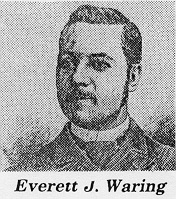
Born in Ohio in 1859, my great-great-uncle, Everett J. Waring, was a school teacher and principal there before moving to Maryland to attend Howard University Law School. While earning his law degree, Waring worked as a pensions examiner at the Department of the Interior. After graduating, Waring embarked on a remarkable journey that culminated in his becoming the first Black lawyer to practice law in Maryland and the first to argue before the United States Supreme Court.
Waring was admitted to the Maryland Bar in 1885, and was specifically recruited by the Brotherhood of Liberty (an organization of Black ministers and civic activists) to move to Baltimore in 1886 to represent a number of Black defendants in a high profile murder trial. This case, and the one that took him all the way to the halls of the Supreme Court, involved his representation of three Black men, including Henry Jones, who were charged with murder arising out of a riot by guano miners on uninhabited Navassa Island (now known as the Bahamas). A riot ensued after the Black men were promised gainful employment and lured aboard a Navassa Phosphate Co. ship that took them from Baltimore to the island to mine guano deposits. When they arrived, conditions were horrible. The workers were subjected to harsh mistreatment and virtual slavery. The captain of the Navassa Phosphate Co. ship was murdered. The company sent another ship and retrieved the workers and brought them back to Baltimore where they were indicted and tried for murder.
After arguing the case of Jones v. United States in several courts, Waring appeared before the Supreme Court to challenge the prosecution of the men on jurisdictional grounds as the crime occurred outside of the United States. In what was celebrated as the very first oral argument by a Black lawyer before the U.S. Supreme Court, Waring eloquently defended his clients on the novel grounds that U.S. courts lacked jurisdiction to prosecute the crime. However, the Supreme Court issued a ruling stating that any ship flying the American flag extends this country’s jurisdiction beyond our national boundaries (and, in this case, to Navassa Island). Regrettably, Jones and two other men were found guilty of murder and sentenced to execution; however, Waring and others successfully persuaded President Benjamin Harrison to commute their sentences to life in prison.
Waring went on to become a prominent Baltimore civic leader, co-founding Baltimore’s first Black-owned bank (Lexington Saving Bank), and establishing himself as a notable real estate investor. In those days, it was quite problematic for a Black lawyer to make a decent living solely from the practice of law. Racial segregation and the inferior financial condition of the Black clientele necessitated pursuit of other entrepreneurial endeavors. Waring also went on to serve as the editor and publisher of newspapers and was ordained as a minister in the AME Church.
As someone who both reveres the past and seeks wisdom and guidance from that past to inform our future course, I find tremendous inspiration in Waring’s life and career. His example not only makes me proud as one of his descendants, but as also fuels my efforts as a lawyer to mentor those who follow in my own footsteps in the legal profession, or who seek to blaze new trails in other careers.
A Life and History-Changing Visit to the Principal’s Office
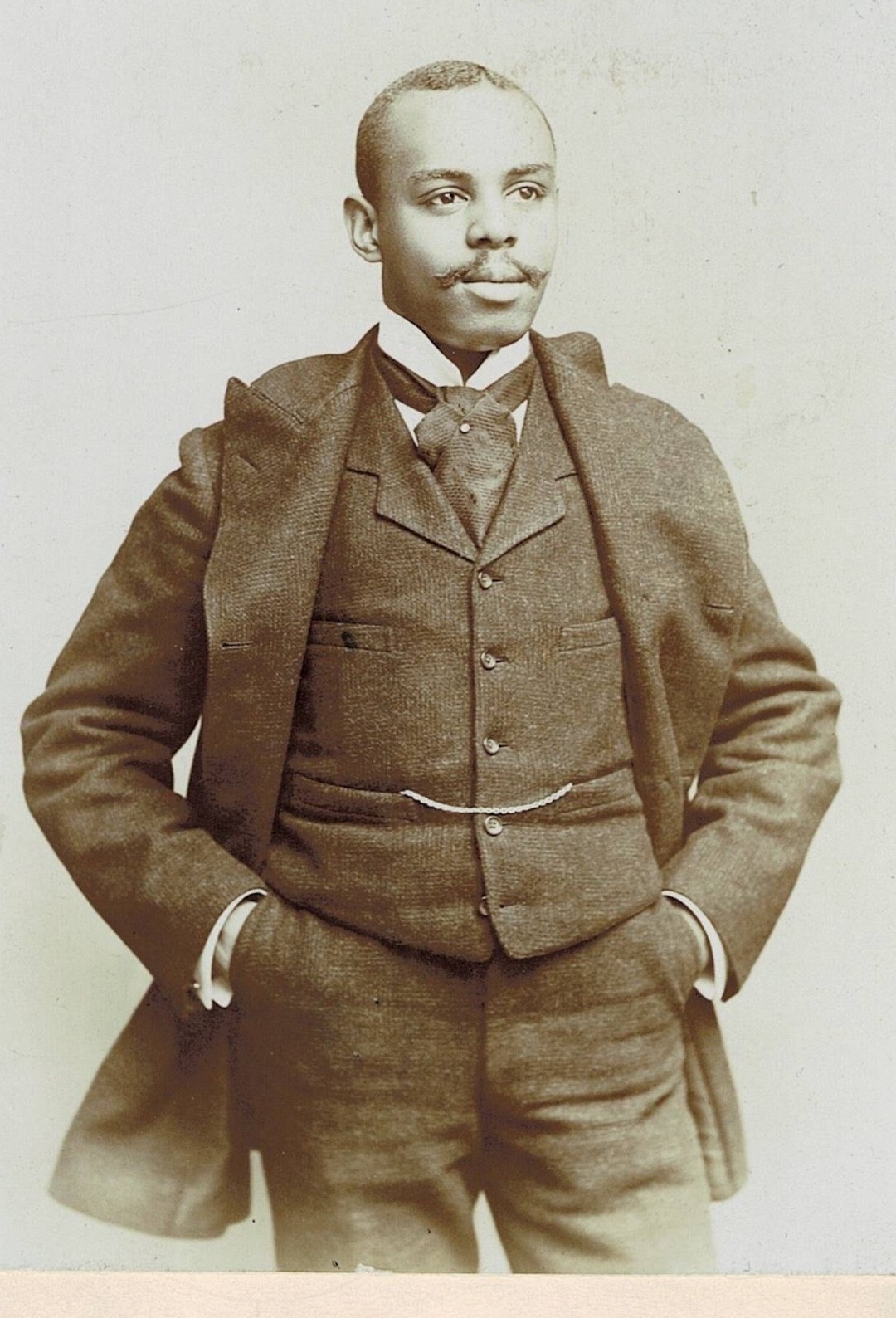
For most rambunctious elementary school students, a visit to the principal’s office is an experience they would just as soon forget. However, for one boy in the early 20th Century attending P.S. 103, a racially segregated school for colored children in West Baltimore, his time in the office of principal William Henry Lee, my grandfather, would leave a lasting impression that arguably laid the foundation for his later monumental achievements of national significance.
The mischievous student had placed some thumbtacks in his teacher’s chair, much to the displeasure of the teacher and Principal Lee. As punishment, Lee required the student to come back to his office after school to memorize the Constitution of the United States. That punishment was likely young Thurgood Marshall’s introduction to constitutional law.
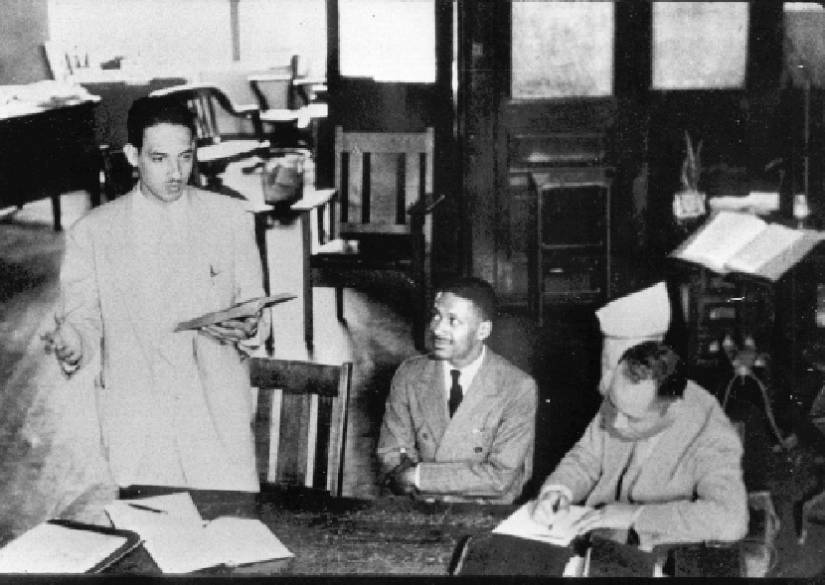
Marshall, of course, went on to an illustrious, history-making legal career as both a civil rights lawyer and the first Black justice on the U.S. Supreme Court. Although Brown v. Board of Education may be the most famous and widely impactful case that Marshall argued, the very first case he filed in 1935 following graduation from law school, Donald Gaines Murray v. Maryland, was particularly meaningful for my brother, Michael Waring Lee, and me.
At the time Marshall graduated from college at Lincoln University, the University of Maryland School of Law in his hometown of Baltimore was not accepting applications from Black students. As such, he instead applied to and earned his law degree from Howard University Law School. Soon after, Marshall filed the very first civil rights lawsuit of his lengthy career in which he sought to integrate the very same law school that had earlier prohibited his application because of the color of his skin. It was because of Marshall’s efforts that, some forty-plus years later, my brother and I were able to attend and graduate from the University of Maryland School of Law. While we were law students, we successfully participated in an effort to persuade the university’s administration to name its soon-to-be constructed law school library in Marshall’s honor. The Thurgood Marshall Law Library still stands proudly on the corner of Fayette and Paca in Baltimore City, only a few blocks from my office at Tydings.
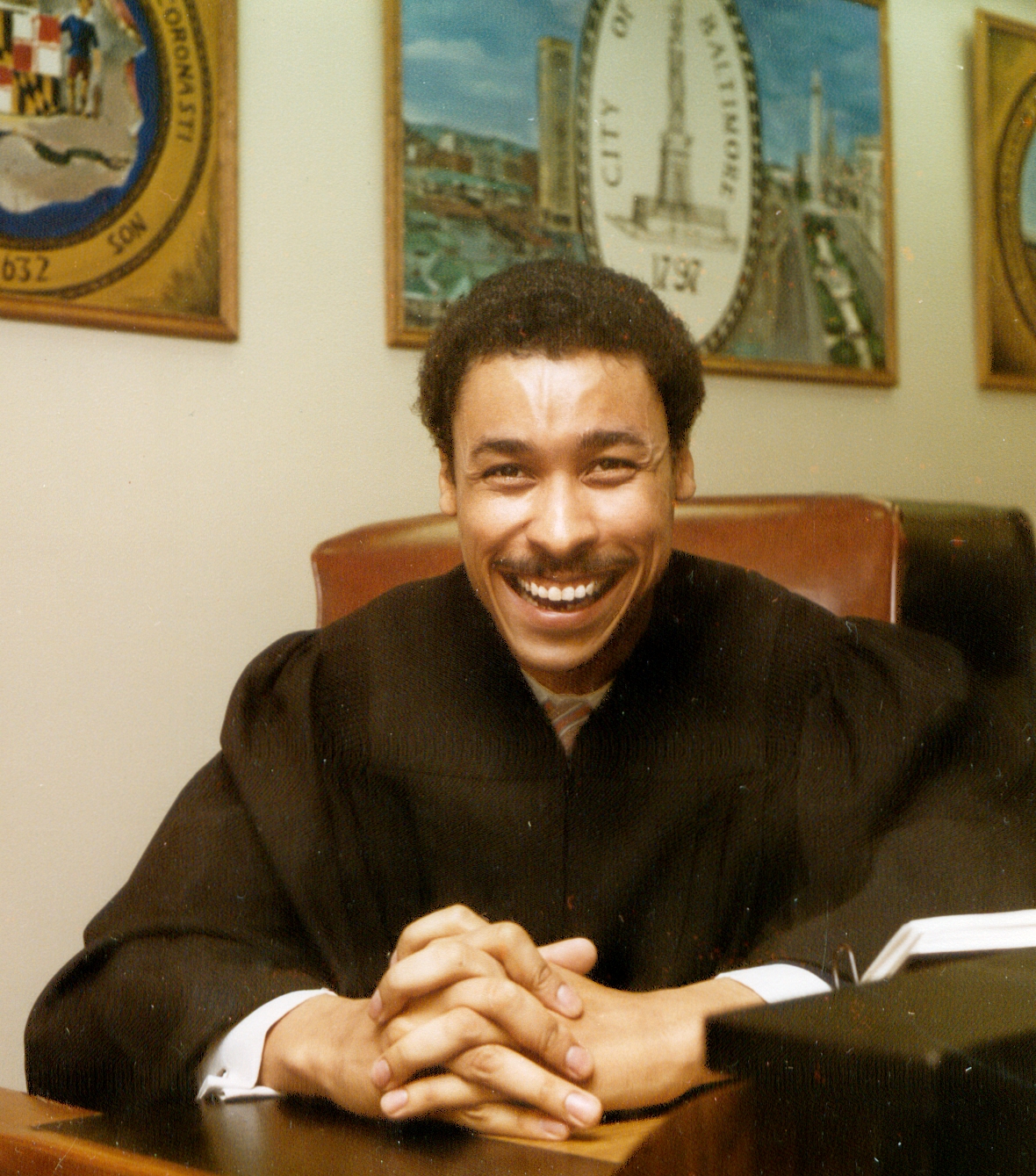
Ironically, the disciplining of an irascible young student named Thurgood Marshall by our paternal grandfather William H. Lee (whereupon Thurgood was reluctantly introduced to the U.S. Constitution) may have ultimately inspired him to pursue a career in the law. Marshall’s subsequent accomplishments in his chosen field of endeavor paved the way for two of Principal William Lee’s grandchildren to one day attend the very same law school that Marshall himself was unfairly denied an opportunity to attend. My older brother, the Hon. Michael W. Lee, was then able to lead a distinguished legal career and became one of Maryland’s youngest Chief Judges when he was appointed by Governor Hughes as Chief Judge of the Orphan’s Court of Baltimore City. This year marks the fortieth year in my practice as a civil rights lawyer.
I share both of these stories during Black History Month not only to shine a spotlight on the achievements of my forefathers, but also to serve as a testament to the determination and resilience of the millions of Black Americans who continue to shape and advance our country’s shared history.